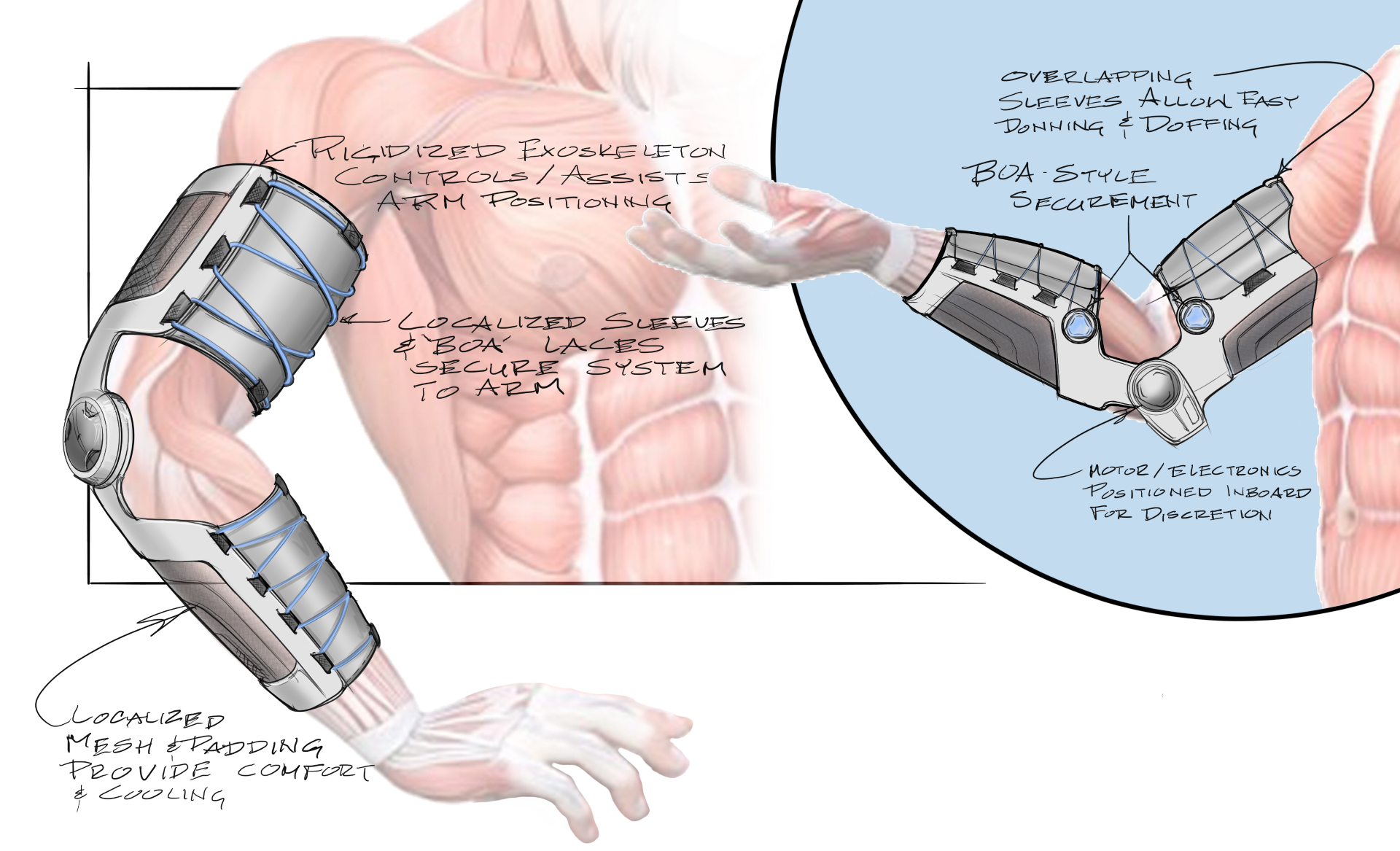
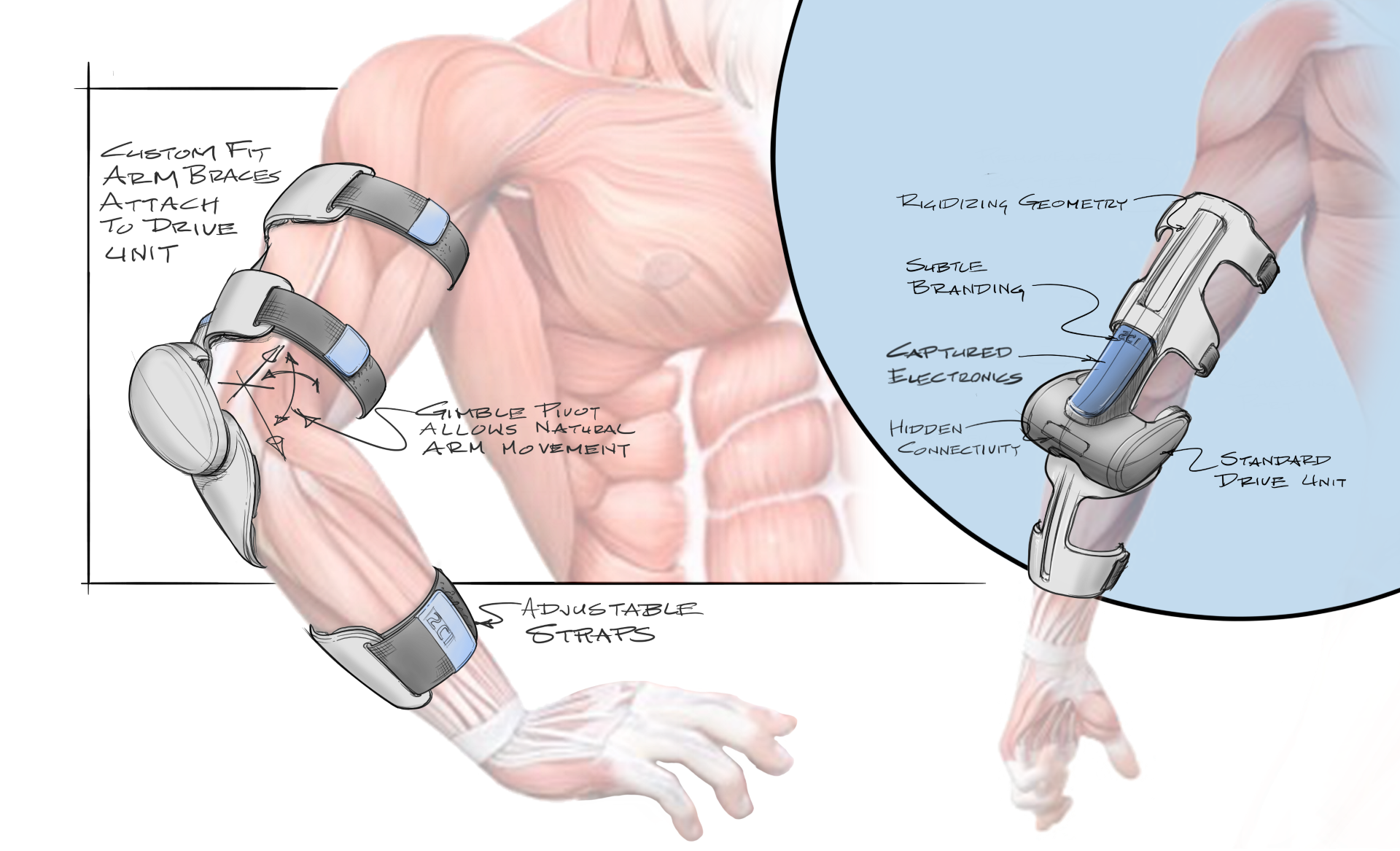
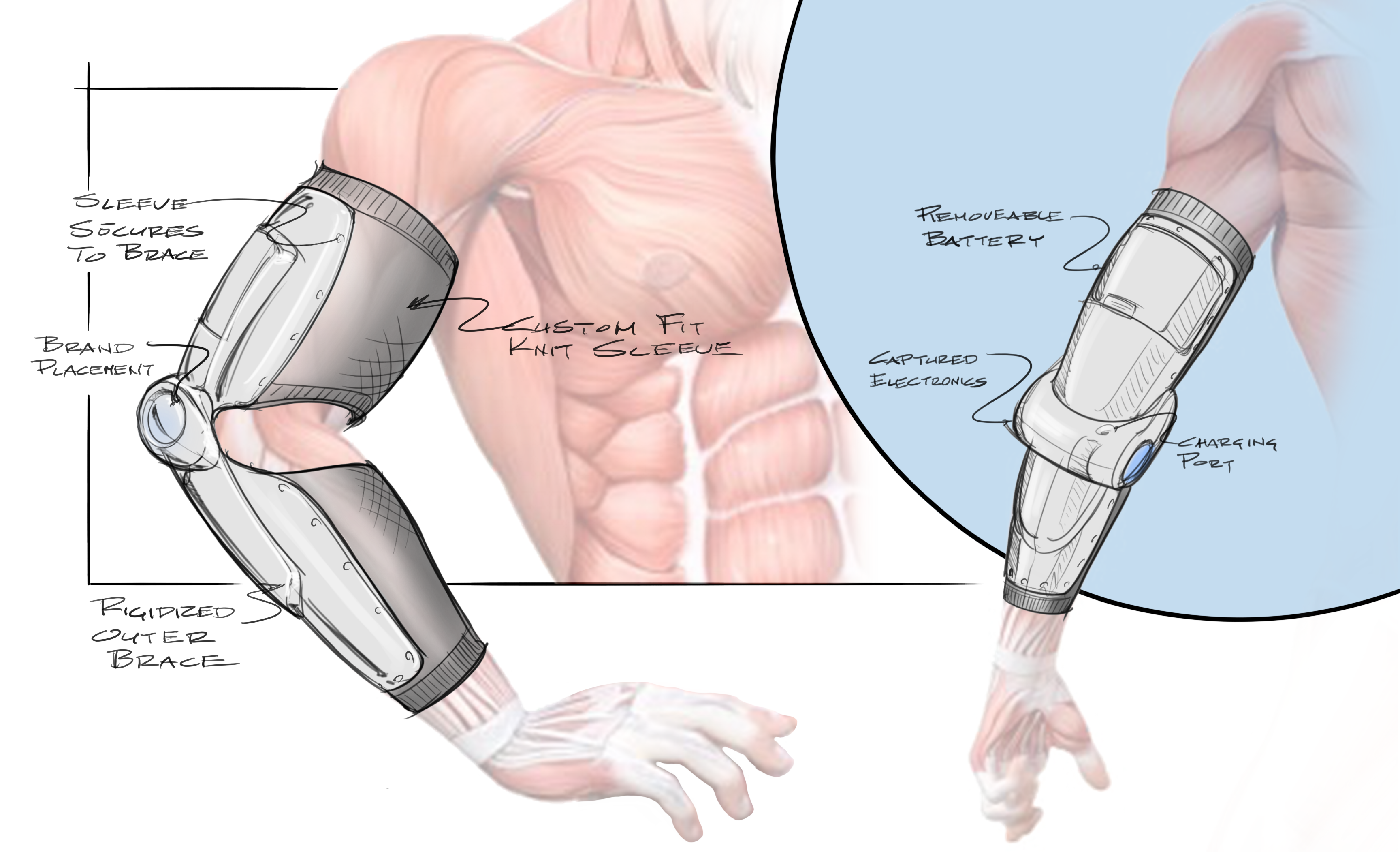
People living with neuromuscular conditions—such as spinal cord injury and stroke—need movement support that continues after they leave the clinic. We are building a take-home device so that support can happen in daily life.
Supported by:
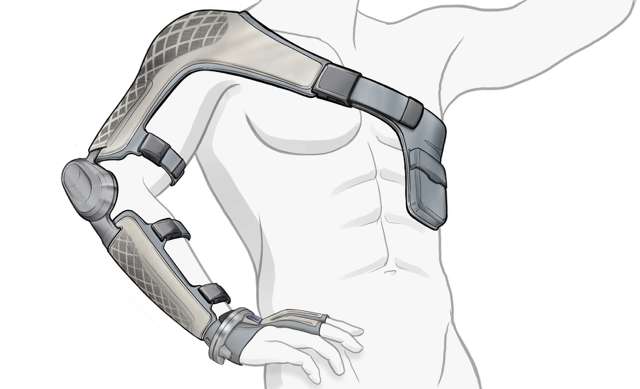
The Rebo is a powered upper-limb orthosis in development, designed as a take-home device for people living with neuromuscular conditions such as spinal cord injury and stroke. It is intended to support arm and hand movement when muscle strength is limited. We are conducting research and pursuing FDA clearance.
The Rebo uses electromyography (EMG)—a standard clinical method for measuring electrical activity in muscle—to detect movement intent and assist the arm at home and in the clinic.
Every time you attempt to move, your muscles produce tiny electrical signals. Try scrolling up and down, or tap the screen to see how these signals respond to your intent.

Our clinical-grade sensors detect muscle electrical activity with high precision, processing signals in real-time.
Brace
The EMG sensors seamlessly connect to our assistive mechanism, translating your muscle signals into precise control commands.
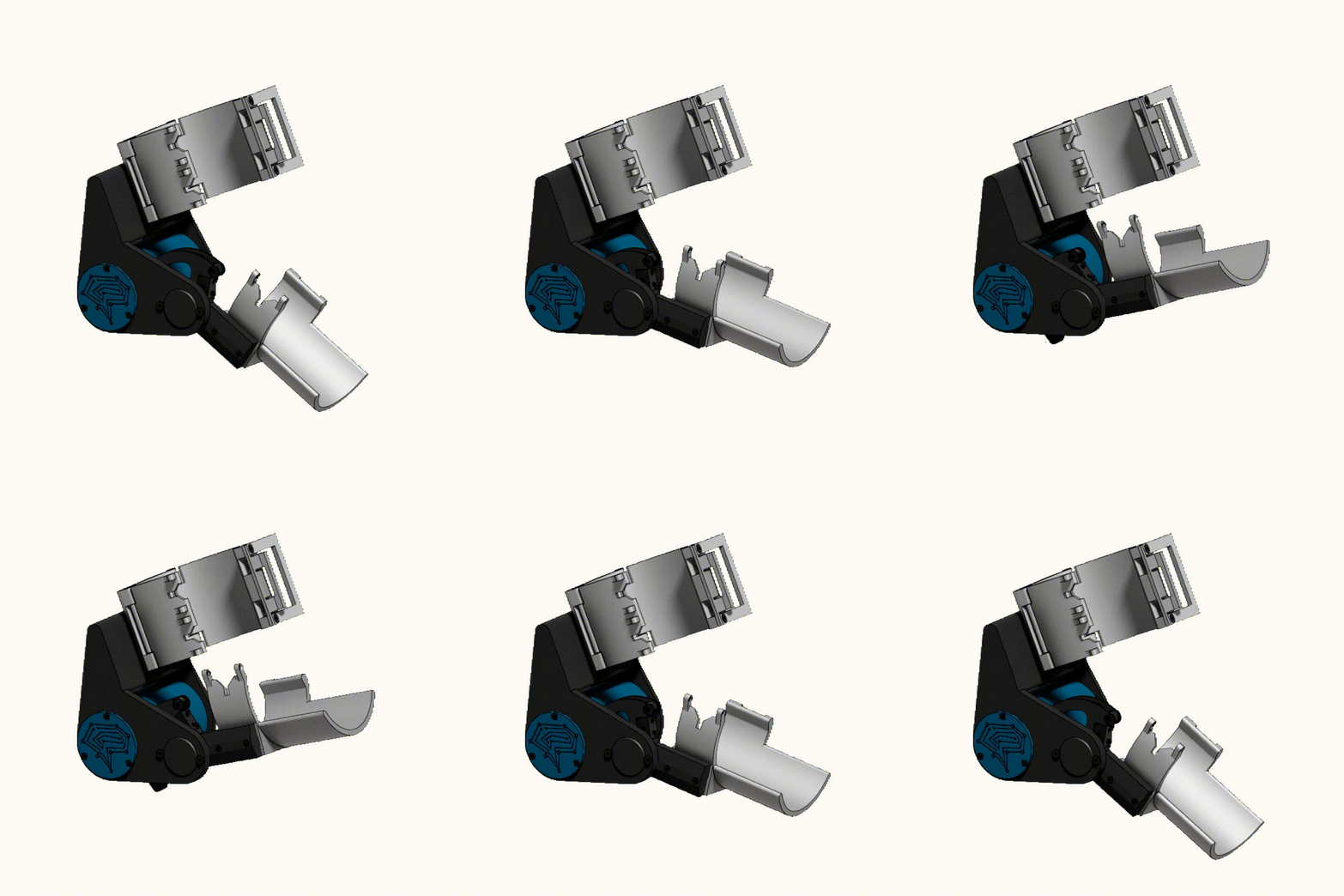
Device animation will appear here
The system provides 10–15 lbs of lift assistance and adjusts to movement intent, with modes intended for clinic use and for continued practice at home.
Today's Progress
Patient Dashboard
Companion apps help clinicians and people using the device at home review progress, adjust settings, and stay aligned on therapy goals. The platform includes occupational therapist–inspired regimens and resistance-training programs so care can stay structured and individualized.
Get in touch about research, clinical collaboration, or how a take-home Rebo could support people living with neuromuscular conditions.
Contact Us